

Freelancing has become one of the most exciting opportunities for students looking to earn, learn, and gain independence while still pursuing their studies. Among the many freelancing avenues, digital marketing stands out as one of the most rewarding. With businesses shifting online and brands constantly seeking visibility, digital marketing services are in high demand.
For students, freelancing in digital marketing is not just about making money—it’s also about building skills that will remain valuable for years to come. In this blog, let’s explore how students can take their first steps into freelancing, what skills they need, how to get clients, and how to balance freelancing with academic life.
Why Digital Marketing is Perfect for Student Freelancers
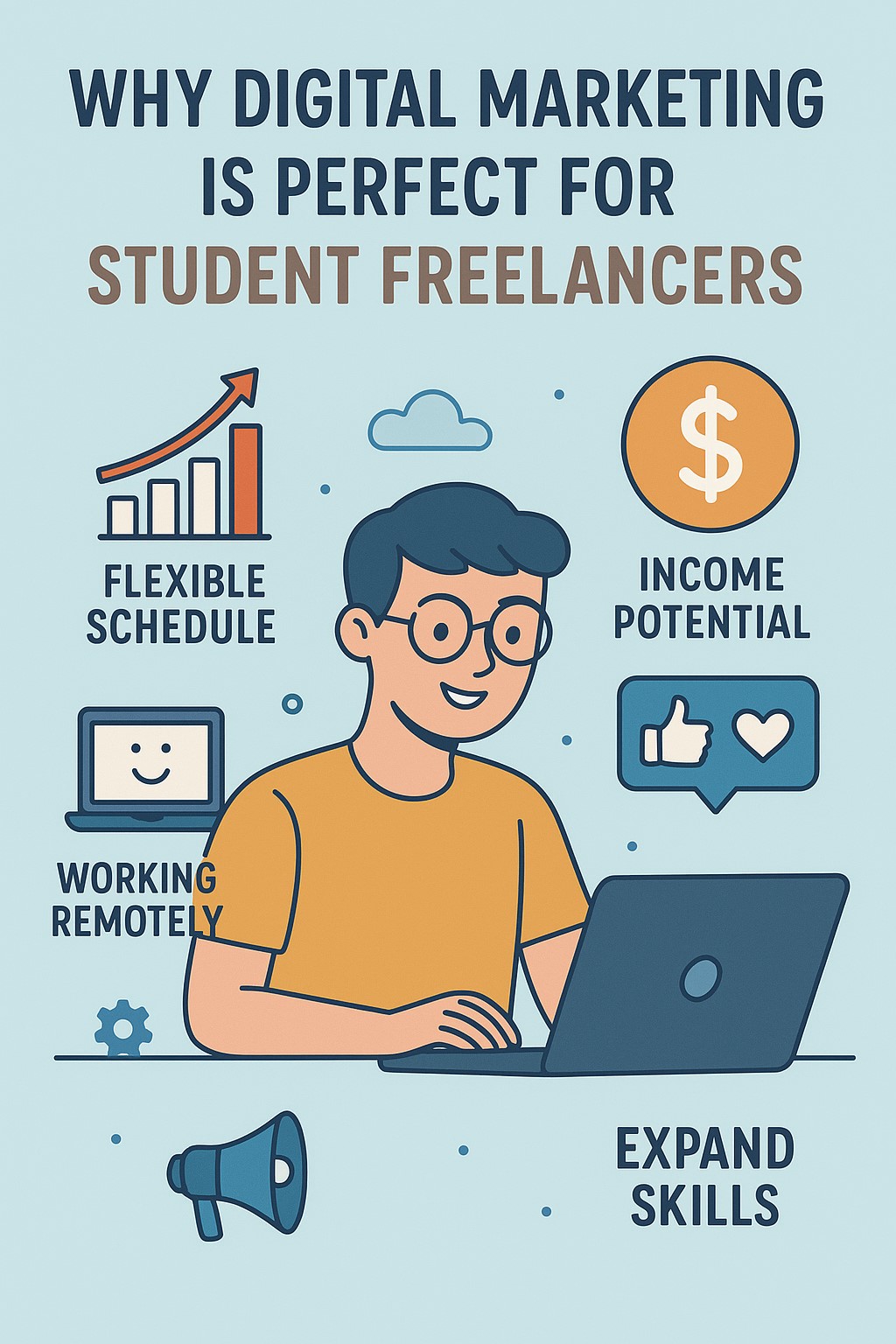
Digital marketing is one of the few career options where formal job experience is not a strict requirement to get started. What matters most are skills, creativity, and the ability to deliver results. Students who understand how to use social media, create engaging content, or analyse online trends already have a head start.
Here are some reasons digital marketing is ideal for students:
- Low barrier to entry: You don’t need expensive equipment—just a laptop and internet connection.
- High demand: Businesses of all sizes need digital marketing to grow.
- Flexibility: Freelancing lets you choose projects that fit your schedule.
- Scalable: You can start small and eventually grow into a full-time business.
Skills Students Need to Start Freelancing in Digital Marketing
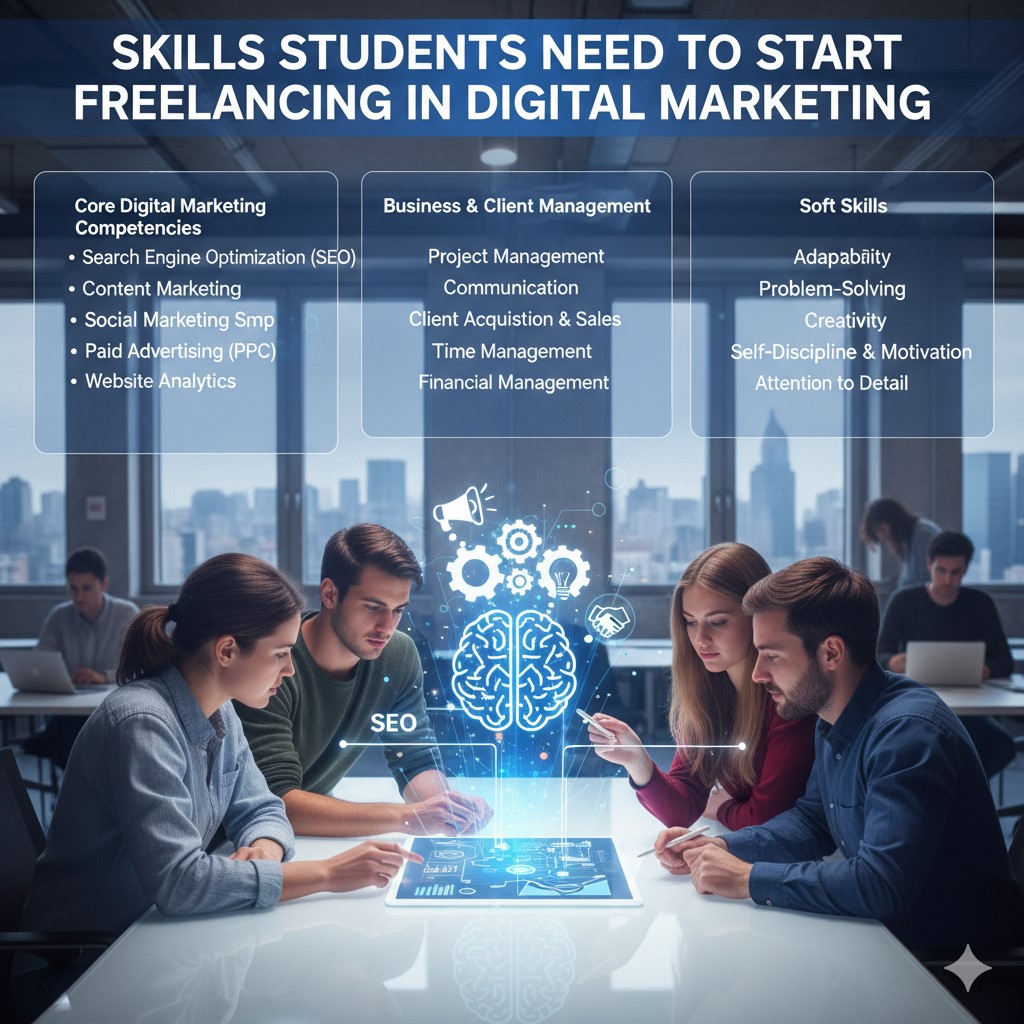
To succeed as a freelancer, students must focus on developing practical, in-demand skills. The good news is that most of these can be learned through self-study, online resources, or short-term professional training programs. Some essential skills include:
- Social Media Marketing
Learning how to manage Instagram, Facebook, LinkedIn, and Twitter pages is a great start. Businesses constantly look for freelancers who can run ad campaigns, post content, and engage with followers. - Content Writing & Blogging
Strong writing skills are valuable in creating blogs, ad copies, social media captions, and newsletters. Clients often prefer freelancers who can combine creativity with SEO knowledge. - Search Engine Optimization (SEO)
Understanding SEO helps freelancers make websites rank higher on Google. This involves keyword research, on-page optimization, link-building, and technical SEO basics. - Pay-Per-Click (PPC) Advertising
Running Google Ads or Facebook Ads requires both strategy and technical knowledge. Freelancers who master paid advertising can deliver measurable results for clients. - Email Marketing
Writing engaging emails and building automated campaigns can significantly help small businesses retain customers. - Basic Design Skills
Knowing how to use Canva, Figma, or Photoshop helps in creating social media posts, infographics, and ad creatives. - Analytics & Reporting
Clients expect freelancers to provide insights. Understanding Google Analytics, Meta Pixel, and campaign dashboards is essential for proving ROI.
Steps for Students to Begin Freelancing in Digital Marketing
Starting a freelancing journey requires planning. Here’s a step-by-step approach students can follow:
Step 1: Learn the Basics
Before offering services, students must first understand the fundamentals of digital marketing. Free resources like YouTube tutorials and blogs are useful, but structured training accelerates growth. For students in NCR, enrolling in a digital marketing course in Gurugram can provide hands-on exposure, mentorship, and certification.
Step 2: Pick a Niche
Freelancers who specialize in a particular area often stand out. For example, you might focus on Instagram Ads for fashion brands, SEO for small businesses, or content writing for startups. Having a niche makes you more attractive to clients.
Step 3: Build a Portfolio
Even if you don’t have paid projects, you can create sample work. Design mock ad campaigns, write blog posts, or optimize a friend’s website. Collecting results from these experiments shows potential clients your skills.
Step 4: Create a Professional Profile
Students should create profiles on platforms like Upwork, Fiverr, and Freelancer. A well-written profile with a strong headline, skills, and portfolio samples increases the chances of being hired. LinkedIn is also a powerful platform for finding freelance clients.
Step 5: Start Small
It’s better to begin with small projects like writing social media captions, running a ₹500 Facebook ad campaign, or creating basic graphics. These projects build confidence and help you collect testimonials.
Step 6: Network and Reach Out
Networking is crucial. Students should reach out to local businesses, startups, and even college societies that may need digital marketing help. Cold emailing or messaging on LinkedIn can land initial projects.
Step 7: Deliver Quality and Be Consistent
The freelancing world is built on trust. Students who deliver work on time, maintain professionalism, and show consistency are more likely to get repeat clients and referrals.
How to Get Clients as a Student Freelancer
Finding the first client is often the toughest part. Here are some strategies to get started:
- Leverage college networks: Offer services to student clubs, events, or even local businesses near your campus.
- Use freelancing platforms: Sites like Fiverr and Upwork are great for entry-level freelancers.
- Social media marketing: Showcase your skills on Instagram, Twitter, or LinkedIn by posting your work samples and insights.
- Offer discounts: In the beginning, offering affordable rates helps in getting testimonials and building trust.
- Ask for referrals: A happy client can connect you to more opportunities.
Balancing Freelancing with Studies
One of the biggest challenges for students is balancing freelancing with academic responsibilities. Time management becomes key here.
- Set specific hours for freelancing, just like you would for a part-time job.
- Use productivity tools like Trello, Notion, or Google Calendar to manage tasks.
- Avoid overcommitment by only taking projects you can realistically handle alongside your studies.
- Prioritize deadlines to avoid last-minute stress.
Remember, freelancing is meant to complement your studies, not replace them.
Common Mistakes Students Should Avoid
While freelancing is exciting, beginners often make mistakes that cost them clients and credibility. Some pitfalls to avoid include:
- Accepting projects without clear understanding of requirements.
- Over-promising and under-delivering.
- Working without contracts or written agreements.
- Not tracking payments and project milestones.
- Ignoring personal branding (e.g., outdated LinkedIn profile).
By being aware of these mistakes, students can save time and build a more sustainable freelancing career.
Growth Opportunities for Student Freelancers
Freelancing is not limited to short-term side gigs. With time, students can expand their freelancing into a full-time career. Here’s how growth happens:
- From freelancer to consultant: With experience, students can move into higher-paying consulting roles.
- Building an agency: Some freelancers eventually hire others and start their own digital marketing agency.
- Creating digital products: E-books, courses, and templates are passive income opportunities.
- Transitioning to corporate roles: Freelancing experience makes students highly employable, as they already have practical skills.
Why Students Should Start Now
The earlier students start freelancing, the faster they build a portfolio. Unlike traditional jobs, freelancing doesn’t require years of prior experience. Even small successes—like running an ad campaign that generates leads—can become valuable case studies for future opportunities.
Moreover, freelancing gives students a sense of independence, teaches entrepreneurship, and improves communication skills. All of these qualities are valuable not only in digital marketing but in any career.
Final Thoughts
Freelancing in digital marketing is a golden opportunity for students to gain real-world experience, earn income, and prepare for a career in one of the fastest-growing industries. With the right skills, a strong portfolio, and consistent effort, students can build a successful freelancing journey while still in college.
If you’re serious about getting started, focus on learning the basics, building your niche, and networking effectively. Remember that freelancing is not about quick money but about long-term growth and relationships. For students in NCR, enrolling in a digital marketing course in Gurugram can provide structured learning and hands-on experience, giving you a strong head start in the freelancing world.
By starting early, students not only position themselves for freelancing success but also gain an edge in the competitive job market after graduation.