
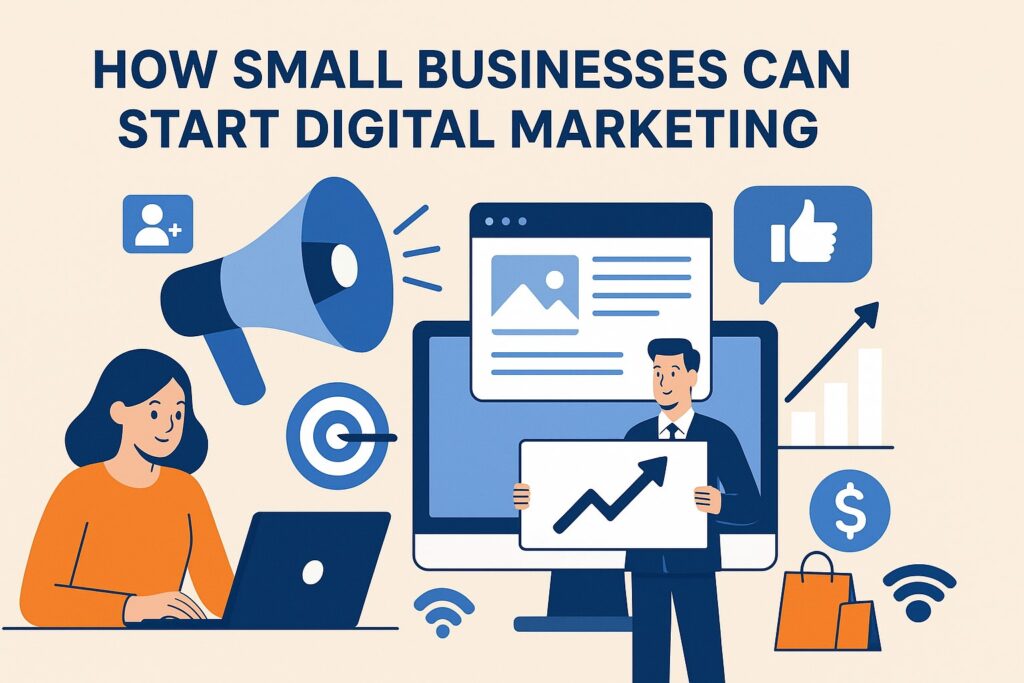
Running a small business in today’s world is both exciting and challenging. While traditional marketing such as word of mouth, banners, and flyers still play a role, customers now spend most of their time online-scrolling through social media, searching on Google, and checking reviews before making any purchase. This makes digital marketing not just an option but a necessity for every small business.
If you’re a small business owner wondering where to begin, this guide will walk you through the essential steps of starting digital marketing, even with limited resources.
Why Digital Marketing Matters for Small Businesses
Digital marketing levels the playing field. Unlike big brands that spend millions on television or large ad campaigns, small businesses can use cost-effective strategies to reach the right audience. Whether you run a bakery, a clothing store, or a service-based business, online marketing ensures that potential customers can find you easily.
Some clear advantages include:
- Cost-effectiveness compared to traditional advertising.
- Measurable results through analytics and insights.
- Direct customer interaction via social media and emails.
- Better local reach, especially if you want to attract customers in your city.
For instance, a local café offering digital marketing in Gurugram can use location-based ads and SEO strategies to attract people living nearby, making it more efficient than a general nationwide campaign.
Step 1: Build a Strong Online Presence
The foundation of digital marketing starts with being visible online. Here’s how to set it up:
-
Create a Business Website
- Keep it simple, mobile-friendly, and easy to navigate.
- Highlight your products or services, contact details, and customer reviews.
- Add a blog section for updates, tips, and engaging content related to your industry.
-
Google Business Profile
- Listing your business on Google helps you appear in local searches and maps.
- Add photos, business hours, and customer reviews to make your profile attractive.
-
Social Media Profiles
- Choose platforms where your customers are active.
- For fashion and lifestyle products, Instagram works well; for services and networking, LinkedIn may be better.
Step 2: Understand Your Audience
Before investing time and money, you need to know who you’re targeting. Ask yourself:
- What problems do my customers face?
- Where do they spend most of their time online?
- What type of content would attract them—videos, blogs, or short posts?
For example, if you’re running a small fitness studio, your audience might be young professionals looking for quick workout solutions. That means creating short Instagram reels or YouTube shorts could bring more results than just writing long blogs.
Step 3: Use SEO to Get Found on Google
Search Engine Optimization (SEO) ensures that when people search for your product or service, your business appears in the results. For small businesses, local SEO is especially powerful.
Here are some beginner-friendly SEO actions:
- Use relevant keywords in your website content, but don’t overstuff.
- Optimize your Google Business Profile.
- Add location-based content, such as “best bakery near [your area].”
- Encourage satisfied customers to leave reviews online.
For example, a service provider offering digital marketing in Gurugram could create content that highlights how they help local businesses, attracting clients who specifically search for services in that city.
Step 4: Leverage Social Media Marketing
Social media isn’t just for entertainment—it’s where small businesses can create trust and build a loyal following.
- Facebook & Instagram Ads: Affordable for small budgets and allow targeting specific groups.
- Content Sharing: Post customer testimonials, behind-the-scenes stories, and product demos.
- Engagement: Reply to comments, answer queries, and show customers you care.
Even a small investment in paid social media ads can bring you visibility among people who may have never heard of your business otherwise.
Step 5: Create Valuable Content
Content marketing helps establish credibility and trust. Instead of only promoting your product, share useful content that solves customer problems.
Examples:
- A bakery could share recipes and baking tips.
- A clothing store could post fashion advice.
- A repair service could upload DIY tips for minor issues.
Valuable content makes people see your business as a helpful expert, which ultimately builds trust and long-term relationships.
Step 6: Use Email Marketing to Stay Connected
Email remains one of the most effective ways to retain customers. By collecting emails through your website or in-store, you can send:
- Discounts and special offers.
- Newsletters with updates.
- Personalized recommendations.
Unlike social media, where algorithms control who sees your content, emails directly reach your customers’ inbox.
Step 7: Explore Paid Advertising (Smartly)
For businesses that want quick visibility, paid ads on Google or Facebook can be highly effective. The good news is you don’t need a huge budget—you can start small and scale up once you see results.Tips:
- Focus on local targeting (city or pin code).
- Use call-to-action buttons like “Order Now” or “Book Appointment.”
- Test different ads and stick with what works best.
Step 8: Track and Improve
One of the best things about digital marketing is that you can measure everything. Tools like Google Analytics and Facebook Insights show you what’s working and what’s not.
Check regularly:
- How many people visited your website?
- Which social posts got the most engagement?
- How many sales came directly from online campaigns?
By tracking results, you can improve your strategy instead of guessing.
Step 9: Build Relationships, Not Just Sales
Digital marketing is not only about selling; it’s about building trust. Reply to customer queries quickly, thank them for reviews, and make them feel valued. A satisfied customer will likely recommend you to others.
Step 10: Keep Learning and Adapting
The digital world changes fast—new platforms, tools, and trends appear every year. Small businesses should stay updated and be willing to adapt. Attending workshops, enrolling in courses, or even consulting experts can make a huge difference.
For instance, many entrepreneurs learning digital marketing in Gurugram attend short-term workshops to sharpen their skills and apply them directly to their businesses.
Final Thoughts
Starting digital marketing for a small business doesn’t require massive budgets or a professional marketing team. All it takes is a clear strategy, consistency, and a willingness to connect with your audience. Begin with the basics—create a strong online presence, optimize for local SEO, use social media, and engage with your customers. Over time, your business will not only attract new clients but also build a loyal community that trusts your brand.
Remember, digital marketing is a journey, not a one-time task. Start small, track your results, and keep improving. The earlier you begin, the sooner you’ll see growth.