
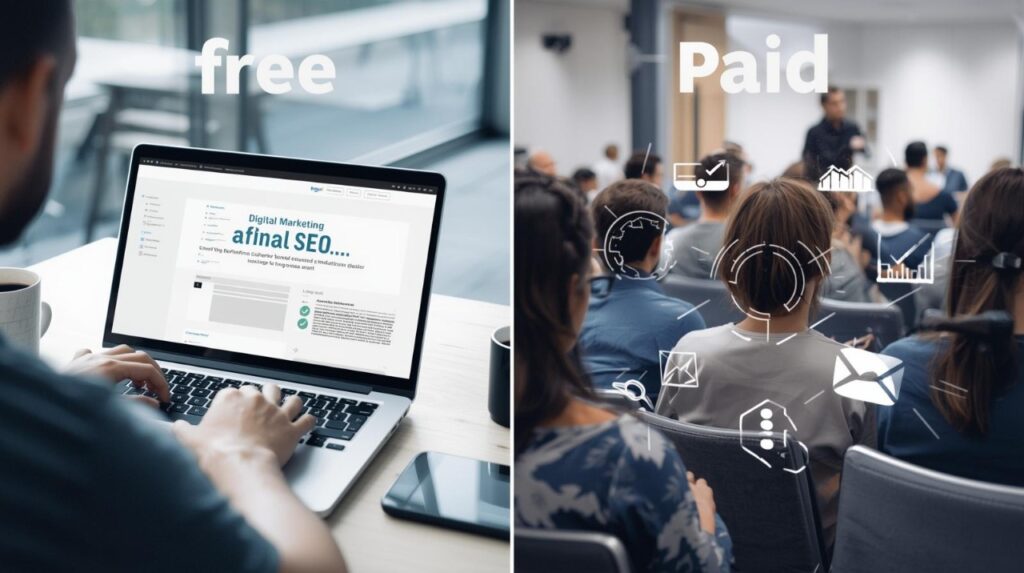
Digital marketing has rapidly evolved from a niche skill into a must-have expertise in today’s job market and business world. Whether you’re a student, a budding entrepreneur, a freelancer, or a seasoned professional aiming to stay relevant, learning digital marketing is no longer optional—it’s essential.
But with thousands of courses available online, one big question arises:
Should you invest in a paid digital marketing course, or start with a free one?
Let’s break it down and help you make the best decision based on your goals, budget, and learning preferences.
🌐 Understanding the Digital Marketing Learning Landscape

Before we compare free and paid options, it’s important to understand what a typical digital marketing course covers. A comprehensive course usually includes:
- Search Engine Optimization (SEO)
- Pay-Per-Click Advertising (PPC)
- Social Media Marketing (SMM)
- Email Marketing
- Content Marketing
- Affiliate Marketing
- Analytics and Data Interpretation
- Marketing Automation
- Mobile Marketing
- E-commerce strategies
Whether it’s a free or paid course, the core topics are often the same—but the depth, delivery, and outcome can vary significantly.
Free Digital Marketing Courses: The Starting Point
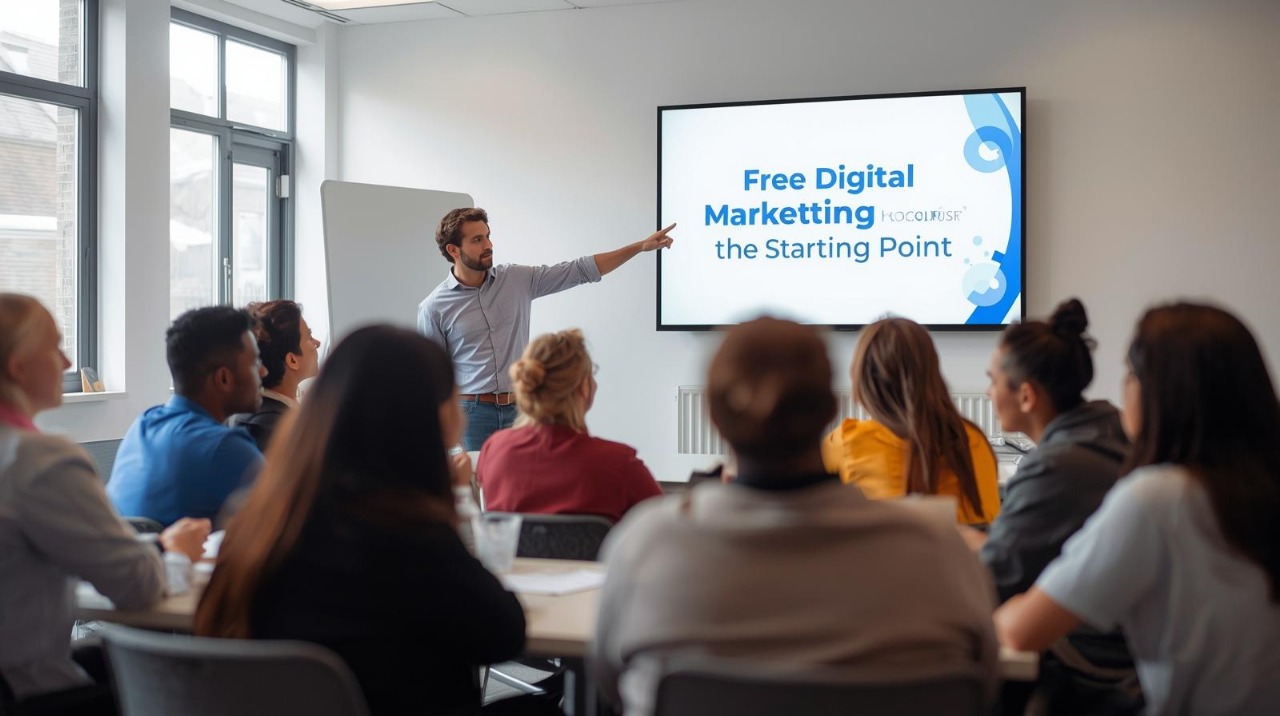
Free courses are widely available online and serve as an excellent starting point for beginners. They’re typically created by industry giants or educational platforms looking to offer value and promote their tools.
Advantages of Free Courses
- No Financial Commitment: You can explore the field without risking your money.
- Learn at Your Own Pace: Most free courses are self-paced and asynchronous.
- Offered by Reputed Companies: For example:
- Google Digital Garage – Great for fundamentals.
- HubSpot Academy: Covers content, email, and inbound marketing.
- The Meta Blueprint is a great resource for studying Instagram and Facebook marketing.
- Semrush Academy – Excellent SEO and SEM insights.
4. Quick Certifications: Many of these courses offer downloadable certificates upon completion, useful for your resume or LinkedIn profile.
Limitations of Free Courses
- Lack of Depth: While great for understanding concepts, free courses often skip over the nuances or advanced strategies.
- No Mentorship or Support: You’re mostly on your own—no one to ask questions or review your work.
- Outdated or Generic Content: Some free courses aren’t updated regularly or are too broad.
- No Real Projects: Free courses rarely include hands-on projects or client-facing simulations.
Who Should Take Free Courses?
- Beginners exploring the field.
- Students on a tight budget.
- Entrepreneurs wanting a basic understanding.
- Marketers who want to brush up on a specific topic.
Paid Digital Marketing Courses: A Structured Investment

Paid courses come in many forms: online bootcamps, degree programs, certificate courses, and even self-paced tutorials. These are often offered by e-learning platforms (like Udemy, Coursera, Skillshare), universities, or industry experts.
Benefits of Paid Courses
- Structured Curriculum: A well-planned learning path, taking you from beginner to advanced.
- Access to Experts: Many paid courses offer access to instructors, live Q&A sessions, community groups, and mentorship.
- Hands-on Projects: Practical assignments, real campaigns, or case studies help you apply what you’ve learned.
- Recognized Certification: Certificates from reputed institutions can boost your CV and credibility.
- Career Support: Some paid programs include resume reviews, LinkedIn profile optimization, or job placement assistance.
Drawbacks of Paid Courses
- Cost: Top-notch programs might cost anywhere from ₹5,000 to ₹1,00,000 or more
- Time Commitment: More detailed courses require more time and consistency
- Quality Varies: A high price doesn’t always guarantee good content—so research and reviews matter.
Popular Paid Course Examples
- Google’s Advanced Programs (via Coursera)
- Digital Marketing Nanodegree by Udacity
- Simplilearn’s Post Graduate Program
- IIDE – Indian Institute of Digital Education
- Udemy’s Top-rated SEO/SEM Courses
Who Should Take Paid Courses?
- Job seekers aiming to become digital marketers.
- Freelancers wanting to scale their business.
- Business owners looking for comprehensive digital growth strategies.
- Professionals seeking a career switch.
Anyone needing accountability, mentorship, and hands-on experience.
Free vs Paid Courses: Head-to-Head Comparison
| Feature | Free Courses | Paid Courses |
| Cost | ₹0 | ₹5,000 – ₹1,00,000+ |
| Depth of Content | Basic to Intermediate | Intermediate to Advanced |
| Learning Format | Mostly self-paced videos | Structured modules, live classes, assignments |
| Mentorship/Support | Rarely available | Usually included |
| Practical Projects | Minimal or none | Included in most |
| Certification Value | Limited | Higher recognition |
| Career Support | None | Often available |
| Best For | Beginners, hobbyists | Career-focused learners, professionals |
How to Decide: A Step-by-Step Guide
If you’re still unsure, here’s a simple decision-making approach:
1. Assess Your Goals
- Want to test the waters? Start free.
- Want to land a job or get clients? Go for paid.
2. Evaluate Your Budget
- Free doesn’t mean useless. You can learn a lot if you’re disciplined.
- If you can invest, look at it as long-term career ROI.
3. Check the Curriculum
- Whether free or paid, review the syllabus.
- Look for updated content that reflects the latest tools and algorithms.
4. Read Reviews
- Platforms like Reddit, Quora, and LinkedIn have real student feedback.
- Avoid courses with lots of fluff or outdated strategies.
5. Combine Both
- Many professionals start with free courses, then transition into paid programs as they specialize.
- Example: Start with Google Digital Garage, then move to Coursera’s Digital Marketing Specialization.
Pro Tip: Knowledge Alone Isn’t Enough
Whether you choose a free or paid course, remember that learning digital marketing is only 50% theory and 50% practice.
- Create a blog or social media page.
- Run small paid ad campaigns.
- Analyze results in Google Analytics or Meta Ads Manager.
- Intern or freelance to apply real-world skills.
Skills come from doing—not just watching videos.
Conclusion: Which Should You Choose?
Both free and paid digital marketing courses have value. The best one for you depends on your learning style, goals, and resources.
✅ Free courses are great for building foundational knowledge and exploring your interests.
✅ Paid courses are ideal if you want structured learning, real skills, and a competitive edge in the job market.
Whether you go free or paid, the key is to start. Digital marketing is a vast, exciting field—and there’s always something new to learn.